


Devotions
Rev Gav
Equality
Matthew 19.1–12
When Jesus had finished saying these things, he left Galilee and went to the region of Judea beyond the Jordan. Large crowds followed him, and he cured them there.
Some Pharisees came to him, and to test him they asked, ‘Is it lawful for a man to divorce his wife for any cause?’ He answered, ‘Have you not read that the one who made them at the beginning “made them male and female”, and said, “For this reason a man shall leave his father and mother and be joined to his wife, and the two shall become one flesh”? So they are no longer two, but one flesh. Therefore what God has joined together, let no one separate.’ They said to him, ‘Why then did Moses command us to give a certificate of dismissal and to divorce her?’ He said to them, ‘It was because you were so hard-hearted that Moses allowed you to divorce your wives, but at the beginning it was not so. And I say to you, whoever divorces his wife, except for unchastity, and marries another commits adultery.’
His disciples said to him, ‘If such is the case of a man with his wife, it is better not to marry.’ But he said to them, ‘Not everyone can accept this teaching, but only those to whom it is given. For there are eunuchs who have been so from birth, and there are eunuchs who have been made eunuchs by others, and there are eunuchs who have made themselves eunuchs for the sake of the kingdom of heaven. Let anyone accept this who can.’
Reflect
When Jesus had finished talking about forgiveness, he went on to answer the question: “Is it lawful for a man to divorce his wife for any cause?” And the follow-up statement: “If such is the case of a man with his wife, it is better not to marry.”
Now, I have already written about this same passage found in the Gospel of Mark, and if you would like to read a short exposition on the nature of divorce, I suggest you read the daily devotion Divorce and the Insight How does mercy trump judgment?
However, for this daily devotion I am interested in what Jesus had to say about eunuchs.
Marriage in First Century Palestine was all about providing an heir and therefore inseparable from sexual consummation and child-bearing. It is why there was such a stigma around the inability to bear children and why it was considered a blessing when a young woman gave birth to a first-born son. Back then, gender and ‘biological sex’ were considered to be the same thing, and the definition of gender was inseparable from marriage.
In most people’s eyes there was only one kind of eunuch — a male who, when they were young, had undergone gender-modification surgery, and because of this they were considered ‘genderless’ — i.e. neither male nor female — and therefore, someone for whom marriage was irrelevant; however, Jesus explained that there were actually three kinds:
“There are eunuchs who have been so from birth.”
“There are eunuchs who have been made eunuchs by others.”
“There are eunuchs who have made themselves eunuchs for the sake of the kingdom of heaven.”
In other words there were people who were considered ‘genderless’ from birth — i.e. who were neither male nor female and therefore did not enter child-bearing marriage. And there were also people who, out of choice and devotion to God, abstained from child-bearing marriage. This choice effectively rendered them ‘genderless’ insomuch that their gender had no marital relevance.
I cannot stress this enough. Marriage was about the expectation of child-bearing and the provision of a male heir, yet Jesus asserted that there were those who, for a variety of reasons, did not enter marriage, and that this was perfectly natural and acceptable. In other words, as gender was to do with marriage, if you were not betrothed, engaged, married, divorced, or widowed, gender (and your biological sex) was irrelevant!
Jesus was not in any way suggesting that people who fell outside the strict definition of male/female, child-bearing, heir-providing marriage could not have lasting and fulfilling long-term partnered relationships — just that, at that time, they would not have called these relationships ‘marriage’.
Today, we have a different definition of marriage as marriage is no longer about child-bearing and providing a male heir! There are many married couples that choose not to have children and this is perfectly natural and acceptable. Therefore, gender is also no longer defined by its role within marriage and conversely, marriage is no longer defined by gender roles! Phew!
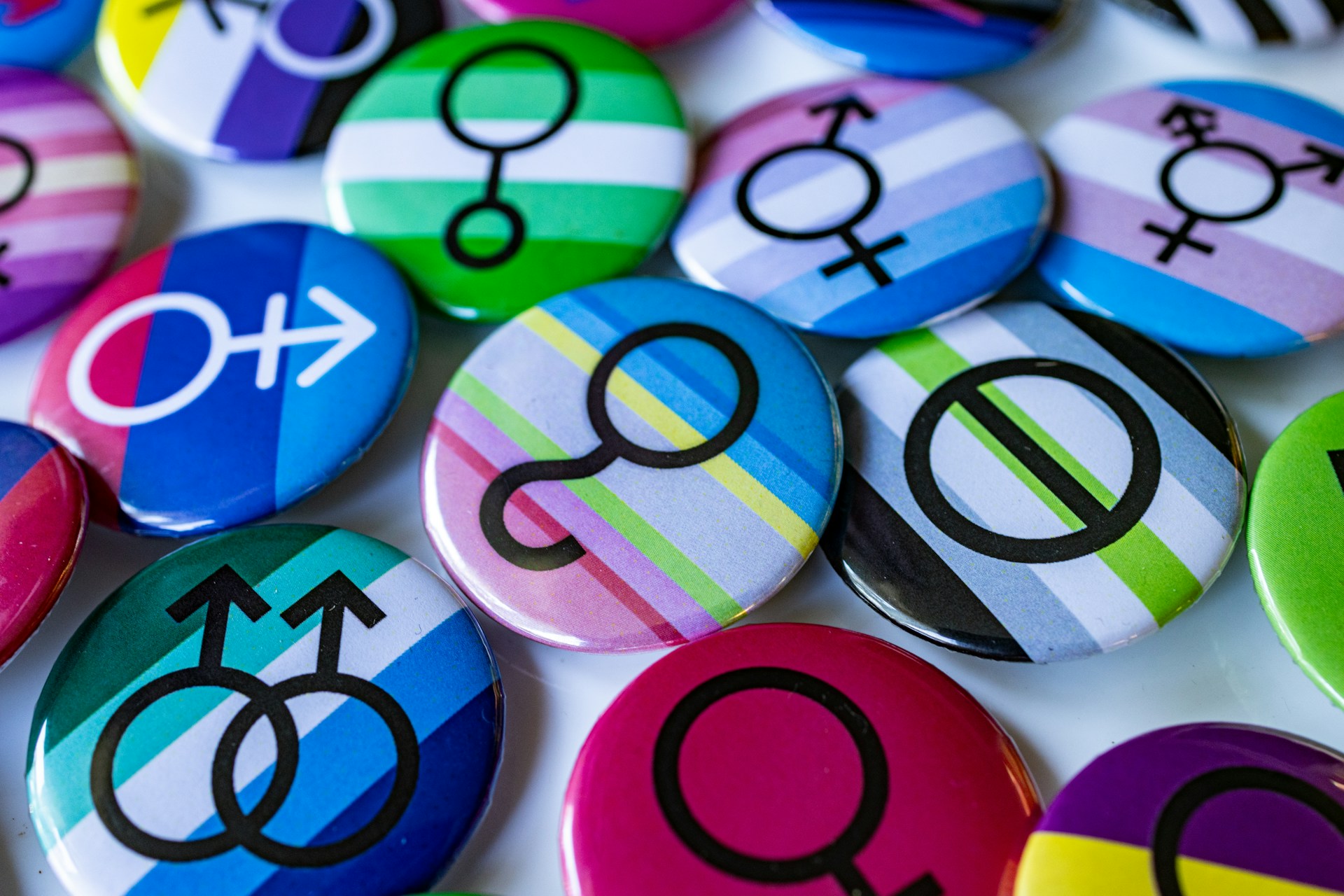
The modern church talks a lot about same-sex marriage, and likewise conflates sex assigned at birth with gender, but our sex assigned at birth is only part of who we are. I have to constantly remind people that each of us has (at least) five things:
1. Sex assigned at birth
2. Biological Sex
3. Gender
4. Sexuality
5. Romantic Orientation
It is not a hard rule but helpful to remember that: 2-5 can be static, fluid, or evolving, and 3-5 can be single or multiple as well as any combination of physical, emotional, mental, or spiritual!
Therefore, the church needs to remember that when talking about same-sex marriage we are not talking only about the first one on the list but all five! A much better term would be equal marriage (where equal means equality for all) where people have the right to marry no matter what their sex assigned at birth, biological sex, gender, sexuality, or romantic orientation!
At FAB Church, we will never stop being advocates for marriage equality and our reasoning is based on sound, biblical theology.
Pray
Holy God
Thank you for
the gift of marriage,
and for friendships
that are filled with
love and faithfulness.
Thank you that my
sex, gender, sexuality
and romantic orientation,
do not prevent me
from being loved
by others and by you.
This day and forever.









 and then