


Insights
Rev Gav
Should we believe in the virgin birth?
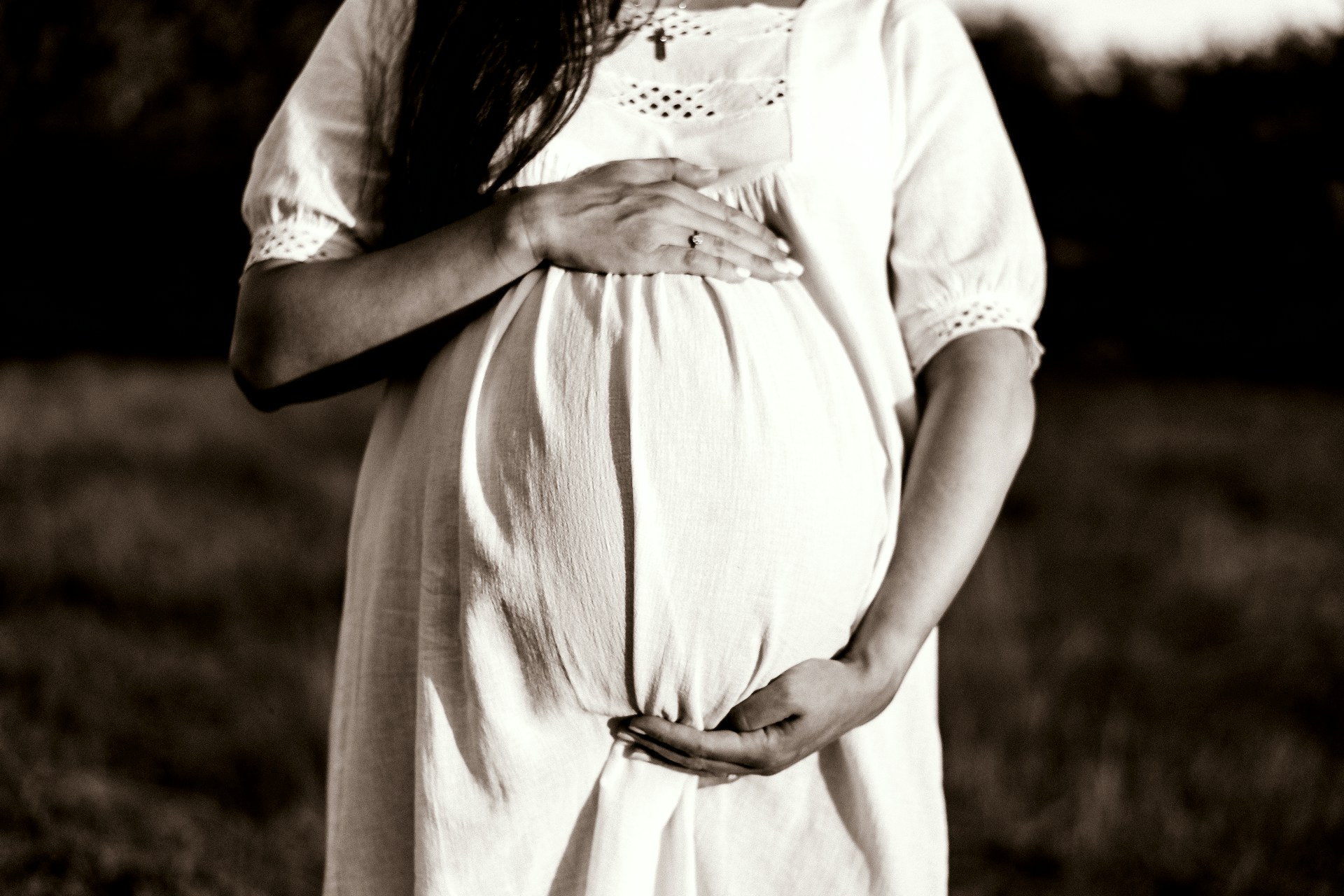
Matthew 1.18–end
Now the birth of Jesus the Messiah took place in this way. When his mother Mary had been engaged to Joseph, but before they lived together, she was found to be with child from the Holy Spirit. Her husband Joseph, being a righteous man and unwilling to expose her to public disgrace, planned to dismiss her quietly. But just when he had resolved to do this, an angel of the Lord appeared to him in a dream and said, ‘Joseph, son of David, do not be afraid to take Mary as your wife, for the child conceived in her is from the Holy Spirit. She will bear a son, and you are to name him Jesus, for he will save his people from their sins.’ All this took place to fulfil what had been spoken by the Lord through the prophet:
‘Look, the virgin shall conceive and bear a son,
and they shall name him Emmanuel’,
which means, ‘God is with us.’ When Joseph awoke from sleep, he did as the angel of the Lord commanded him; he took her as his wife, but had no marital relations with her until she had borne a son; and he named him Jesus.
Reflect
Helen and I recently visited an Andy Warhol exhibition. Now, I have not been a massive lover of art or poetry, not because I do not appreciate it, but because I have been so self-absorbed with music and creativity, I have not given it the time it deserves. Art is not ‘something nice to look at’ or simply a ‘means of self expression’ but a way of communicating a deeper truth. As I looked at Andy Warhol’s screen-printed portraits I was captivated. Through the use of lines, form, and colour, he captured something — an essence — that would be missed if one was simply looking at a photograph. He did not just capture the image of a person, he captured something about who they were in that moment. The art affected me in a way that defies scientific explanation, and if I were to ask of Warhol’s portraits whether they were a ‘literal’ true (factual) depiction of the subject, it would be the wrong question to ask and miss the point. Well, I wonder if, like art, we should approach the nativity story in the same way? Let me explain.
Over the years I avoided talking about the virgin birth, probably because it is contentious. As a good conservative evangelical I was warned about liberal church leaders who had abandoned the faith and did not believe in the virgin birth or even the resurrection of Christ, and so I towed the line, afraid of asking questions or ‘going there’. It was as if such doctrines were bricks in a wall, and if us pastors and theologians started to tamper with them, the whole wall would be in fear of collapse; however, is this how faith should be? Should we accept blindly biblical narratives without questioning them, unpacking them, or discussing them?
At the other end of the scale, or the opposite end of the religious spectrum, there were those that consigned such miraculous Bible stories to the place of myth — mere fantasies that make a good yarn to be spun. The topic of the virgin birth would not be a topic of discussion with my atheist friends, probably because I did not want to get into a theological argument about a subject which I had been taught to accept blindly and one that I would not be able to defend with any degree of certainty or diligence. At Christmas carol services it was preferable to simply read the nativity passages, quickly moving through the story to reach the firmer ground of a baby in a manger and the incarnation. Yes, I can talk about that!
So, what do I, a progressive, post-evangelical, charismatic, contextualist make of the virgin birth?
The first question I ask is why did Matthew (and Luke) include it? I do not think it is enough to say, “because it happened,” and the reason for this is that this whole section of the nativity story is steeped in allusions to Old Testament stories. Each word or phrase contains a hyperlink to another part of the Bible, and Matthew — writing to a Jewish audience well versed in Jewish literature — wanted his readers to make those connections.
Matthew was stressing the authenticity of Jesus as the fulfilment of God’s promise of an everlasting king who would come from the line of David. Therefore, when it came to writing about an angel speaking to a young woman (or virgin) about conceiving a son who would rise up to be a great leader and give himself in an act of self-sacrifice, Matthew’s readers would have immediately made the connection with other great leaders from Israel’s history.
Barren women or young childless women miraculously bearing sons was considered a sign from God, and angels portending such births was also considered a sign from God. These were badges of authenticity sown into the narrative.
Leaving the matriarchs Sarah (Isaac’s mother), Rebekah (Isaac’s wife), Rachel (Jacob’s wife), Hannah (Samuel’s mother), and the Shunammite woman (Elisha’s benefactor) to one side, let’s look at the story of Samson. Manoah’s wife was barren, she was forewarned by an angel that she would conceive a son, and in Jewish tradition she was of the royal tribe of Judah. Samson was called to be a Nazarite — someone consecrated to God — and Nazareth, the place of Jesus’ birth comes from the same root word meaning ‘to be set apart’. Samson was a saviour who delivered Israel, was filled with the Spirit, and died in an act of self-sacrifice. To a Jewish reader of Matthew’s gospel it would be impossible not to make this connection.
To make these connections even more evident, Matthew even quotes from the prophet Isaiah, making a story originally about King Ahaz about Jesus. Isaiah wrote, “Look, the virgin (or young woman) shall conceive and bear a son, and they shall name him Emmanuel.” The context of this quote is a story about God keeping God’s promise to preserve the covenant made with David, even in the face of corrupt, evil regimes, and the young woman or virgin giving birth was given by God as a sign of this promise.
In the very few sentences devoted to this part of the nativity story, Matthew (and Luke) could not have squeezed in much more by the way of allusions to the Old Testament to confirm Jesus of Nazareth as the continuation and fulfilment of God’s promises. By writing the way they did, they painted a picture — one that communicates a deeper truth or meaning.
Today, you and I have what sociologists describe as a scientific worldview. In other words, we look at the world through a modernistic, post-enlightenment lens. It is part of our culture, and for the most part we are completely oblivious that we see the world in this way, nor can we conceive of looking at the world in any other way. Therefore, when we approach the Bible, we ask whether it is literally true (factual) or not, and difficult as it may be for us to get our heads around, the first century readers of Matthew’s gospel would not have approached the text in this way. They would have asked if it was ‘truthful’ and ‘authoritative’ in terms of whether it conveyed meaning and purpose.
If we look at the story of the nativity through our lens of modernity, then it has to be literally true (factual) or literally myth (fictitious), and I hope that I have demonstrated and explained that to ask if it is literally true is the wrong question to ask. The text was never written to be looked at through such a lens or bear the weight of our modern scientific scrutiny, so the question is, how then should we read the text?
There is a third path, one that wends its way between the extremes of literalism and allegory, and this is to live with and hold lightly the paradoxes that are presented in the Bible. Like looking at an Andy Warhol portrait that is neither a literal depiction of a person, nor simply paint on a canvas, but art that conveys a deeper truth, we must allow the biblical narratives to read and affect us.
If you ask me whether I believe in the virgin birth, you will no doubt want me to give a yes or no answer, but I will probably answer that the story conveys a meaning that bears the hallmarks of God — one that speaks to the character of a God who came in the person of Jesus Christ for you and for me, and for all humanity.
Amen.









 and then