


Insights
Rev Gav
Where are today’s Herods?
Matthew 2.13–end
Now after they had left, an angel of the Lord appeared to Joseph in a dream and said, ‘Get up, take the child and his mother, and flee to Egypt, and remain there until I tell you; for Herod is about to search for the child, to destroy him.’ Then Joseph got up, took the child and his mother by night, and went to Egypt, and remained there until the death of Herod. This was to fulfil what had been spoken by the Lord through the prophet, ‘Out of Egypt I have called my son.’
When Herod saw that he had been tricked by the wise men, he was infuriated, and he sent and killed all the children in and around Bethlehem who were two years old or under, according to the time that he had learned from the wise men.Then was fulfilled what had been spoken through the prophet Jeremiah:
‘A voice was heard in Ramah,
wailing and loud lamentation,
Rachel weeping for her children;
she refused to be consoled, because they are no more.’
When Herod died, an angel of the Lord suddenly appeared in a dream to Joseph in Egypt and said, ‘Get up, take the child and his mother, and go to the land of Israel, for those who were seeking the child’s life are dead.’ Then Joseph got up, took the child and his mother, and went to the land of Israel. But when he heard that Archelaus was ruling over Judea in place of his father Herod, he was afraid to go there. And after being warned in a dream, he went away to the district of Galilee. There he made his home in a town called Nazareth, so that what had been spoken through the prophets might be fulfilled, ‘He will be called a Nazorean.’
Reflect
If you were a first century Jewish person reading this account in Matthew’s gospel, you would have immediately made the connection between this story and the story of the Exodus. With the parallels between Pharaoh and Herod (slaughtering first-born children), and the return from exile in Egypt back to the promised land of Israel, Jesus was being portrayed as ‘the second Moses’ — a great deliverer of the people.
Each move from Jospeh — from Bethlehem to Egypt, from Egypt to Judea, then to Nazareth in Galilee — was preceded by an angelic visitation in a dream, and a reference to an Old Testament scripture. This was a way of cementing that God was underpinning and ordaining the life of Jesus, and connecting him firmly to the tradition and heritage of Israel — but one that fell outside the royal Herodian line.
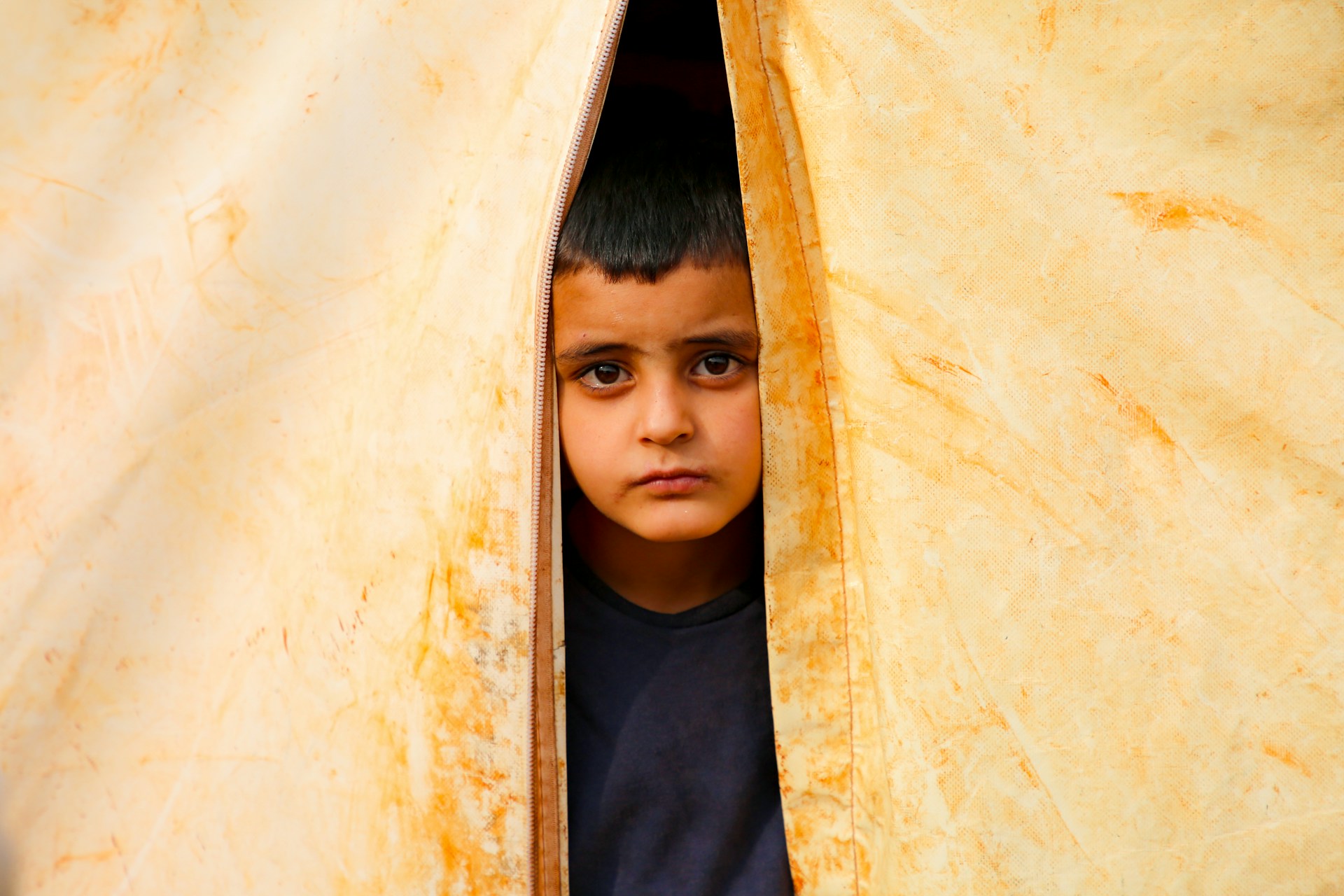
Beneath the allusions to the Exodus and the theological affirmations of dreams and angels, were a regular family, struggling to survive in a world of political turmoil and persecution. Mary and Joseph were refugees.
My daughter is a paramedic with the South West Ambulance Service in the UK, and she regularly attends to the needs of asylum seekers, living in temporary accommodation in hotels. The right wing media re-name asylum seekers as ‘immigrants’, enabling them to lump together anyone living and working in the UK who is from a different country, or worse, even though they are British, from a different heritage.
One thing that makes me so proud of my daughter, and our health service, is that the care provided is without discrimination and free at point of service to all. The medical attention given is not means tested, and it is an expression of raw, human compassion, given without prejudice or judgment. A right-wing friend of mine asked if I was happy that my taxes were being used to house, support, and provide health care for asylum seekers, and my answer was, and is, an unequivocal, yes — absolutely!
The most potent weapon in the bigot’s arsenal is to dehumanise others — to ‘other’ them. One of the things that struck me about my daughter’s experiences with asylum seekers was that they were typically humble and gentle, people who had nothing, and who had endured great hardships to do what? To protect their families. Most were forced to leave their homes, extended family, and property or face starvation, violence, or even death.
In the UK, asylum seekers are housed in temporary accommodation while their claims are processed. Sometimes, their accommodation is far from town centres with few transport links, leaving them isolated. On one occasion, my daughter visited a family who had not seen anyone or been anywhere for months. Even if they could go out during the day, there was nowhere for them to go and no way of getting anywhere, and this was accompanied by the fear they might be abused or be treated badly by those they met. As well as their social isolation, they struggled eating foreign foods that catered not to their diets nor religious observances, and often there was no fresh produce with which to provide nutritious food for their children to eat.
Many of the asylum seekers my daughter encounters are very young women — late teens — pregnant or with children. Having lost their husbands, they have no partners and no support network. Imagine being heavily pregnant and unable to feel your baby move, seeking medical attention, unable to speak the language, with no phone, no belongings, and deeply afraid?
Perhaps the most shaming aspect of their circumstances is the fear they feel from the British public — you and me. They face a mentality of persecution and resentfulness and most have, at our hands, experienced outright, blatant, and vile racism. Imagine, just for a moment, that your 4-year old child has cerebral palsy and you are told to ‘go home’ to a place with no health care, no hospitals, and no support. This is not just cruel, it is unconscionable.
Nearly all the asylum seekers visited by UK paramedics are grateful just to see a friendly face, and thankful and blessed for the care they receive. The ‘news’ reports that they are a burden to the health service, yet my daughter has yet to discover a single asylum seeker who is abusing the system. The reality is that the abusers of the system are British — typically alcoholics or drug users — such as the white, English woman who called out an ambulance 180 times over the past year. No, it is not ‘immigrants’ putting our systems under strain.
We have been given so much and are unbelievably privileged, yet so ignorant of the reality of our social situations, choosing to believe the ‘news’ and blaming ‘immigrants’ for our problems. The barriers are immense and a great deal of education is required, especially amongst the older generation. The hardest part of my daughter’s job is not treating those in desperate situations, but walking away. “There’s just too much need and their greatest need is love and kindness.”
Joseph and Mary were refugees and asylum seekers, and Joseph did everything within his means to protect his little family and keep them safe. We applaud his resourcefulness and leadership, and give thanks for his faithfulness and wisdom.
Pharaohs and Herods have always been present in our world, and for us, as it becomes increasingly polarised, they take many subtle and not-so-subtle forms, perpetuating their prejudice on mainstream and social media. Right now, we have to decide what kind of society to which we want to belong, and if we wish to belong to a society of compassion and care, then each one of us must play our part in recognising bigotry and calling it out.
As Christians, we play to a different tune, one that contains the lines, ‘mercy triumphs over judgment’ and ‘love one another’, where the ‘other’ is no longer a stranger but our family, and we must do all we can to offer them love and kindness.
If, like me, you do not know where to begin, perhaps a good place to start is with the prayer, “Lord, show me the way.”
Amen.
Photo by Salah Darwish on Unsplash
Pray
Holy God
Show me how I can
be a beacon of light
for you in the world.
Show me how I
can make a difference
to those rejected by society,
especially the marginalised
refugees and asylum seekers.
May your loving mercy
reign in my heart
this day and forever.









 and then