


Insights
Rev Gav
Without John would there have been Jesus?
Matthew 3.1–12
In those days John the Baptist appeared in the wilderness of Judea, proclaiming,
‘Repent, for the kingdom of heaven has come near.’ This is the one of whom the prophet Isaiah spoke when he said,
‘The voice of one crying out in the wilderness:
“Prepare the way of the Lord, make his paths straight.” ’
Now John wore clothing of camel’s hair with a leather belt around his waist, and his food was locusts and wild honey. Then the people of Jerusalem and all Judea were going out to him, and all the region along the Jordan, and they were baptised by him in the river Jordan, confessing their sins.
But when he saw many Pharisees and Sadducees coming for baptism, he said to them, ‘You brood of vipers! Who warned you to flee from the wrath to come? Bear fruit worthy of repentance. Do not presume to say to yourselves, “We have Abraham as our ancestor”; for I tell you, God is able from these stones to raise up children to Abraham. Even now the axe is lying at the root of the trees; every tree therefore that does not bear good fruit is cut down and thrown into the fire.
‘I baptise you with water for repentance, but one who is more powerful than I is coming after me; I am not worthy to carry his sandals. He will baptise you with the Holy Spirit and fire. His winnowing-fork is in his hand, and he will clear his threshing-floor and will gather his wheat into the granary; but the chaff he will burn with unquenchable fire.’
Reflect
Today is the second Sunday in Advent and traditionally, during Advent, the church focuses on a different character each week, and today’s character is John the Baptist. Therefore, today’s gospel reading from the common lectionary (a fixed set of Bible readings spanning the year) is from Matthew Chapter 3 which features John. Note: we add ‘the baptist’ bit to John’s title to distinguish him from the apostle and gospel writer John, but from hereon in I will simply refer to him as John (which incidentally means God is gracious).
I like the fact that the more orthodox churches give John ‘air time’ and his own special Sunday during the year because it prevents us from relegating him to being a bit-part in the story. He is rightly recognised as the one who ‘heralded’ the arrival of Jesus but he was way, way, way more than that.
John was a religious, social, and political revolutionary and activist. When talking about Jesus he quoted the prophet Isaiah with the words, “Prepare the way of the Lord, make his paths straight,” but what exactly does this mean?
If you make a straight path for someone it means you are aiding them and helping them in their political, social, or religious journey to success. Other modern equivalent idioms might be, “Plough the ground for him!”, “Lay the groundwork for him”, “Pave the way for him”, “Blaze a trail for him”, “Grease the wheels for him,” or even, “Do the legwork for him.”
John didn’t just proclaim the arrival of Jesus, he embodied a movement and mobilised the masses to make a stand against the corruption, collusion, and apathy of the religious elite, calling out their leadership, and undermining their authority such that it could be replaced with a new religious order. John was a pioneer, an entrepreneur, and an innovator.
The pharisees and sadducees (religious law makers, holders, and keepers), because of John’s popularity and esteem with the people, not wishing to lose face (or votes), paid lip service to John’s message and came for baptism. When they arrived, John didn’t mince his words calling them a “brood of vipers!”
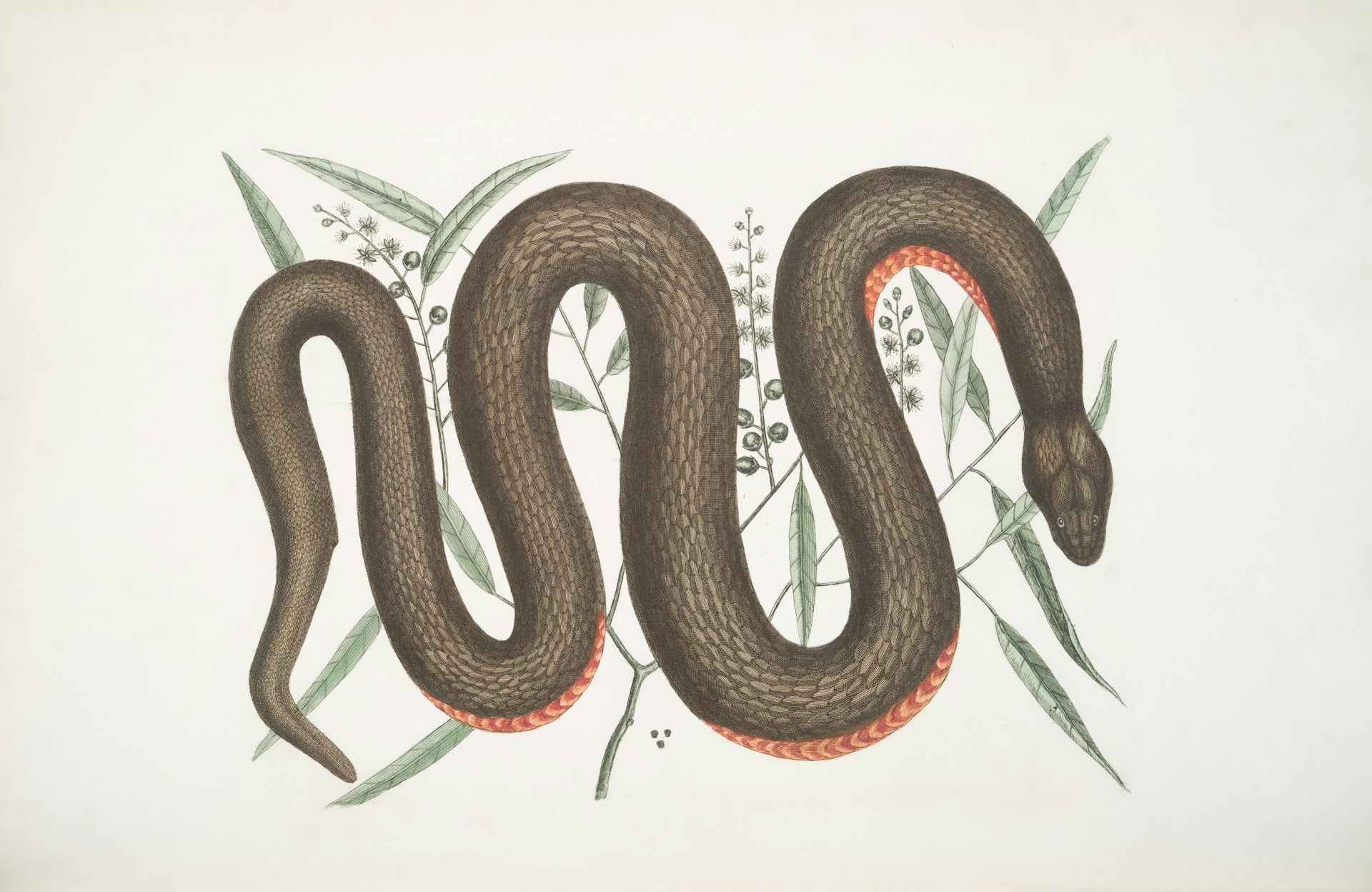
Snakes were associated with the serpent in Genesis, symbolising deceit, evil, and rebellion against God. To call someone a snake in this context was to call them a child of the devil with their venomous teaching poisoning and contaminating others. When there was bush fire, snakes (who often were hidden from sight) could be seen escaping or fleeing from the flames, and in the same way, he asked these pharisees who were visibly coming for baptism, “Who warned you to flee from the coming wrath?” No, John did not mince words!
John’s message was a microcosm of Jesus’ message. He was essentially saying, “This is God’s way and how things are going to be in the future so get with the program now.” He called people to start living God’s way in the present because the world we experience in the here and now matters. It matters how we live and relate to God, to one another, and to the environment. We can no longer live lives where we are the primary beneficiaries, where we put our trust in our own abilities, our wealth, or our heritage. Accepting God into your life is not a ticket and a free ride to heaven.
John didn’t just plough the ground, he ripped it up — and his teaching to those who asked how they should live, was to respond, urging them to live lives of social justice.
If I let my imagination wander, I imagine what John would say to us today? I think he would respond by urging us to live God’s way of social and environmental justice, focused on our prevailing culture of consumerism and materialism and how our lifestyles indirectly hurt others and our planet.
“And when you want to upgrade your phone, your tablet, or laptop to the latest version, do you ask yourself whether it is really necessary?”
“And when you buy a car, do you need a brand new one or would a second-hand one do? And does it need to be a 4×4 if you are never driving off road?”
“And when you buy those clothes or those shoes, have you discerned whether they are made in a sweatshop? Does your favoured brand have an ethical policy?”
“And when you bank or save for your pension, are your funds being used to invest in weapons and arms companies that destroy lives?”
“And when you have the choice to eat steak or chicken off the menu, do you choose the one that has the least impact on the environment?”
“And how much rubbish do you put out that goes into landfill to be buried and forgotten about or burned, releasing poisonous noxious gases? Do you recycle that which can be recycled, or better still, avoid purchasing products with unnecessary packaging in the first place?”
“Don’t come to me with excuses for your lifestyle, defending your purchase decisions, or telling me you have the right to do so because you can afford it. Live God’s way. Repent, and start bearing good fruit — fruit that will last.”
Feel a little uncomfortable? Yep, me too.
As Christians, we need to call out our frivolous and me-centred lifestyles and get with God’s program. Every life decision we make, every journey, and every purchase impacts others — either directly or indirectly. One day, when we stand before God, we cannot say we did not know or were ignorant of how our lives affect others and God’s creation. This stuff matters to God and it matters in the here and now; in the present.
It is never too late for any of us to reflect on our lives and repent — to change our mind and turn in a different direction towards God; to change our behaviours and our purchase decisions based on a primary respect for others and for nature. How much of a wake-up call do we need? How much of a wake-up call do I need?
The language of John was extreme because the world needed to hear his message, and it was a message that those who held the power and authority — the dictators, oppressors, and those with their heads in the sand and fingers in their ears — did not want to hear — and you know how the story unfolds.
The King was coming to inaugurate his kingdom, and John told his listeners to live out that kingdom now. Will we do the same?
Photo by The New York Public Library on Unsplash
Pray
Holy God
I know my lifestyle
and choices have
had a negative impact
on others and the
world around me.
I repent of the way
I have put myself first
and how my lifestyle has
squandered people
and resources.
Forgive me and help me
to live your way;
the way of Christ.
Now and forever.









 and then